
AI payments, with on-chain limits
Agents can propose what to pay.
The Vault enforces financial limits.
Circle executes on-chain.
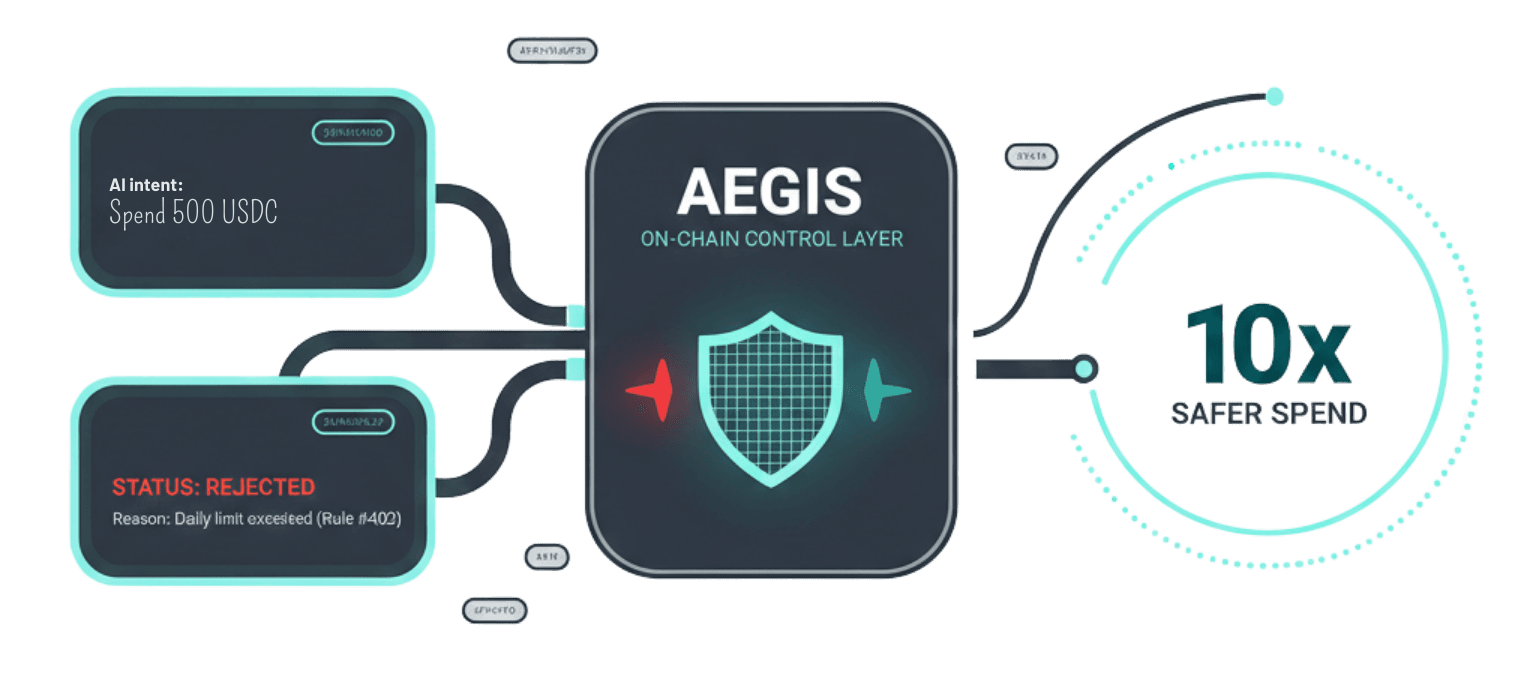
Ecosystem Validation
AEGIS was built and evaluated across recognized AI and Web3 platforms.




Autonomous agents can decide.
But who controls what they spend?
Autonomous agents can initiate purchases, subscriptions, and payments faster than any human review process.
Without enforced limits, an agent can overspend, repeat transactions, or drain funds by design or error.
Prompt rules and policies are not enough. Financial safety requires hard, on-chain enforcement.
Turn AI autonomy into enforceable financial control.
Agents can interpret human intent and propose payments without hardcoding every possible decision.
AEGIS validates every proposed payment against on-chain financial rules before execution.
Only approved transactions are executed via Circle. If a rule is violated, nothing moves.
Every AI payment follows a strict on-chain path.
The frontend does not approve or reject payments. All enforcement happens on-chain.
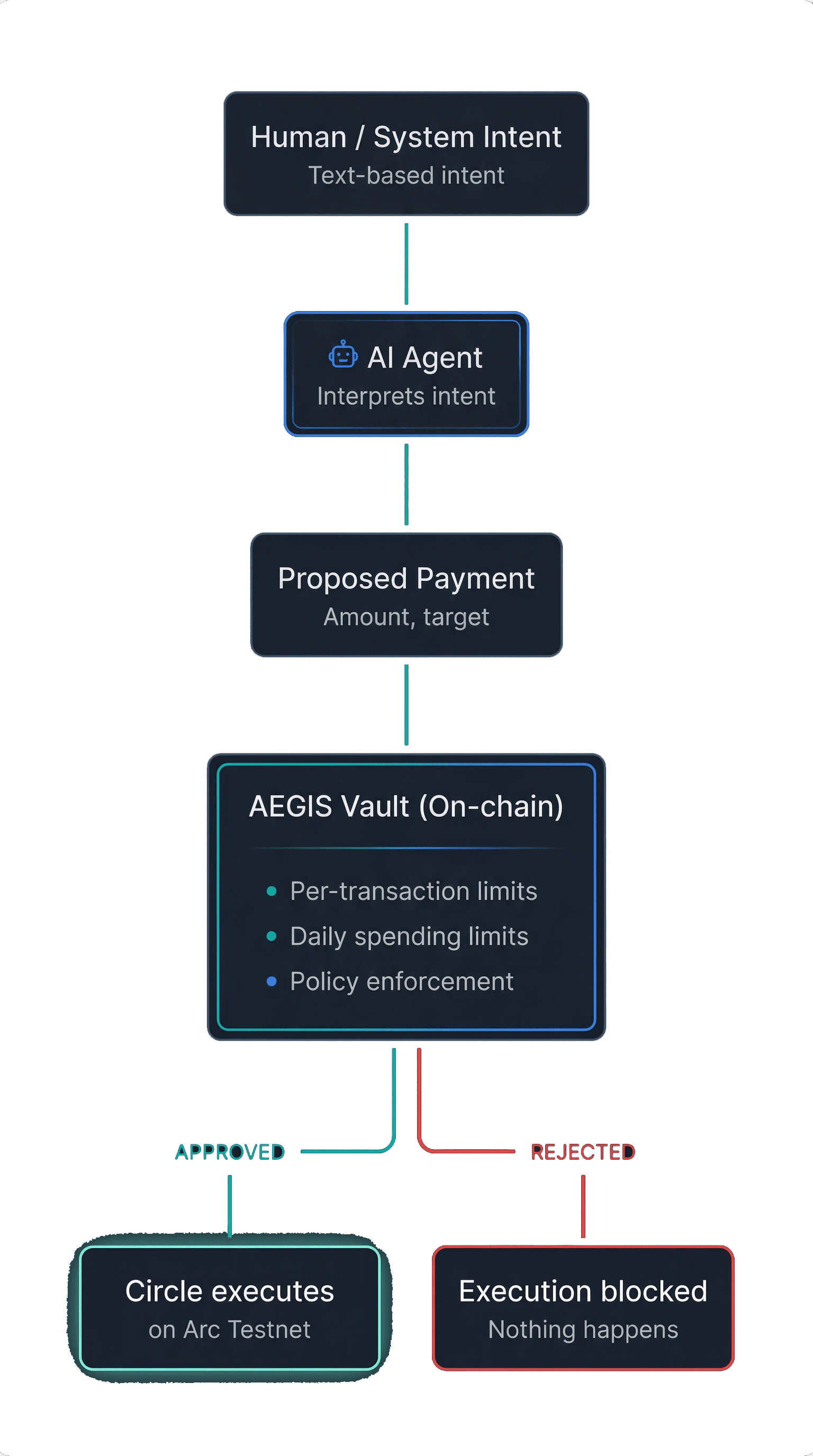
Financial rules are enforced before execution.
AEGIS focuses on financial safety, not behavioral control.
Each proposed payment is checked against a maximum allowed amount before execution.
Cumulative spending is tracked on-chain to prevent runaway or repeated transactions.
Rules are enforced on-chain. If a limit is exceeded, execution is blocked — not delayed.
Most AI systems rely on trust. AEGIS relies on enforcement.
AEGIS is not an AI assistant. It is a financial control layer for AI systems.
Explore how an AI payment is evaluated.
Understand how an intent becomes a proposed payment (amount, target).
See how the Vault evaluates the proposal against enforced financial rules.
Observe the outcome deterministically — without moving any funds.
Built by Blockbears


Clear answers for technical questions.
This section is designed to prevent the most common misunderstandings — especially around UI approval and execution.